

Is BDSM Safe? 10 Truths About Consent, Trust, and Healthy Power Exchange
Affiliate Disclosure: Some links on this page are affiliate links, which means I may earn a small commission at no extra cost to you when you make a purchase through one of those links.
It helps support A Lil’ Bit Kinky and keeps this space cozy, educational, and judgment-free. 💕
Is BDSM safe?
It’s one of the most common questions people ask when they begin learning about kink, power exchange, or alternative relationship dynamics. It’s also one of the most misunderstood.
For many people, the first question they ask is simple: is BDSM safe, or is it something that requires extensive experience?
Popular media often portrays BDSM as dangerous, chaotic, or rooted in harm. Those portrayals leave out the most important truth. Ethical BDSM is built on consent, communication, and trust. Without those elements, BDSM does not exist.
To understand whether BDSM is safe, it helps to understand how it actually works in real relationships. Education is often what transforms the question “is BDSM safe” from an abstract worry into a practical understanding.
What BDSM Really Is
BDSM is an umbrella term that includes Bondage, Discipline, Dominance, Submission, Sadism, and Masochism. It describes consensual activities, dynamics, and relationship structures where power exchange, sensation, or control is intentionally negotiated between adults.
People are drawn to BDSM for many reasons. Some are curious about power exchange. Others want deeper emotional connection or structured intimacy. For some, BDSM offers stress relief, grounding, or a sense of safety through clearly defined roles and boundaries.
What all ethical BDSM shares is choice. BDSM is not something that happens to someone. It is something people actively agree to explore together.
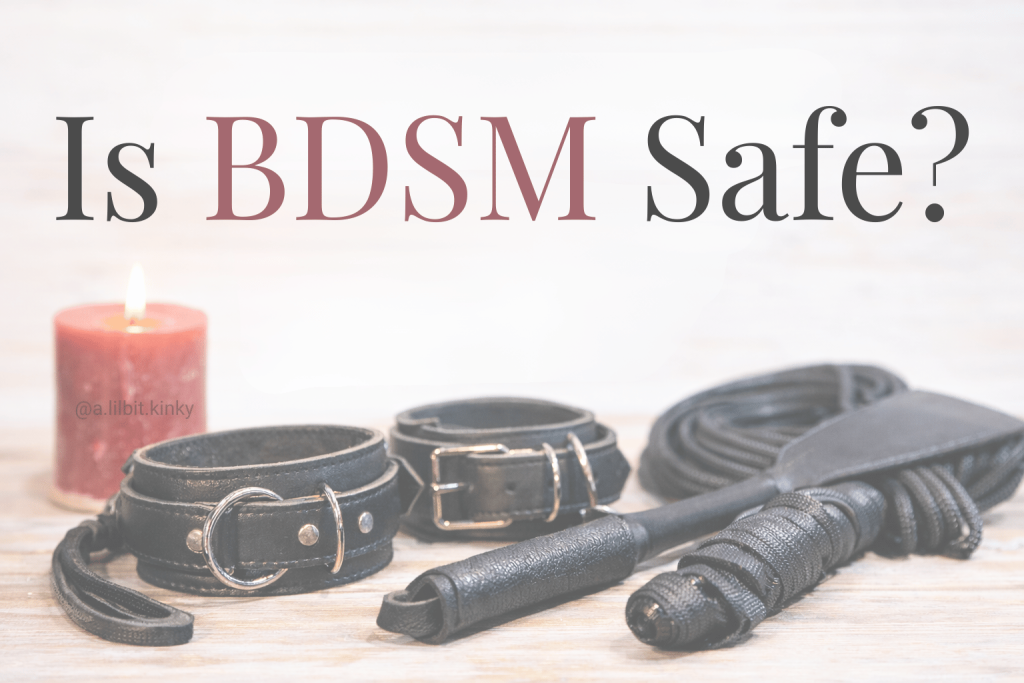
Is BDSM Safe and Consensual?
So, is BDSM safe when practiced responsibly? Yes, it can be.
For people new to kink, asking “is BDSM safe and consensual” is less about fear and more about wanting clear, reliable information.
BDSM safety is rooted in education, preparation, and communication. Unlike spontaneous or assumed intimacy, BDSM encourages people to talk openly about what they want, what they don’t want, and what they need in order to feel secure.
Over time, the BDSM community has developed guiding frameworks to support safe participation. These include concepts like Safe, Sane, and Consensual, Risk-Aware Consensual Kink, and Personal Responsibility Informed Consensual Kink.
While the language has evolved, the intent remains the same. BDSM acknowledges that some activities involve risk, but those risks are discussed, understood, and consented to ahead of time.
Safety in BDSM does not mean the absence of intensity. It means the presence of awareness and care.
Consent as the Foundation of BDSM
If there is one reason BDSM can be safe, it is consent. Understanding consent is one of the clearest ways to answer the question, is BDSM safe and consensual, especially for people who are new.
Consent in BDSM is intentional, informed, and ongoing. Before any play occurs, partners talk about boundaries, limits, health concerns, emotional triggers, and expectations. These conversations allow everyone to make informed choices rather than assumptions.
Consent also remains active during play. Many people use safewords or signals to communicate how they are feeling in the moment. A commonly used system is the traffic light approach, where green means continue, yellow means slow down or check in, and red means stop immediately.
Consent can be withdrawn at any time. Ethical BDSM respects that without punishment, pressure, or guilt.
When consent is ignored or overridden, BDSM stops being BDSM. This is why consent is central when answering the question, is BDSM safe and consensual, especially for beginners.
Why BDSM Is Not Abuse
One reason people continue to ask “is BDSM safe” is because BDSM can look intense to those who are unfamiliar with it. Restraints, impact play, verbal authority, or visible power exchange can be shocking when viewed without context.
When people only see the surface, it is easy to assume harm where there is actually consent. This is where misunderstanding begins. The difference between BDSM and abuse is not the activity itself.
It is consent, choice, and accountability.
In consensual BDSM, every element of the interaction is discussed in advance. Participants talk openly about what they want, what they do not want, what is off-limits, and what might be emotionally difficult. These conversations happen before play begins, and they continue throughout the relationship. Consent is informed, intentional, and freely given.
In abuse, there is no meaningful consent. Control is imposed rather than chosen. Boundaries are ignored or punished. Fear is used to maintain power instead of trust. The person experiencing harm does not have the ability to safely say no without consequences. That distinction matters.
In BDSM, participants retain autonomy at all times. Even when someone chooses to give up control within a scene or dynamic, that control is granted temporarily and can be taken back immediately. Safewords exist for a reason. They are not symbolic. They are absolute. When a safeword is used, everything stops.
In abusive situations, there is no stop button. There is no respected boundary. There is no accountability.
BDSM relies on transparency. Negotiation happens in the open. Expectations are clear. Aftercare is provided. Mistakes are addressed. Responsibility is taken. Healthy BDSM communities actively reject coercion, manipulation, and secrecy.
Abuse thrives in isolation.
BDSM does not.
Another critical difference is intention. BDSM is about shared experience, mutual satisfaction, and trust-building. Abuse is about control for the sake of control. One seeks connection. The other seeks domination without consent.
Even when BDSM includes pain, humiliation, or authority, those elements are desired, negotiated, and agreed upon by everyone involved. When those same actions occur without consent, they are no longer BDSM. They are harm.
Understanding this distinction is essential when asking whether BDSM is safe and consensual. Without consent, communication, and care, BDSM does not exist. What exists instead is abuse, and the BDSM community is clear about that line.
When people ask is BDSM safe, they are often really asking how consent separates ethical BDSM from abuse.
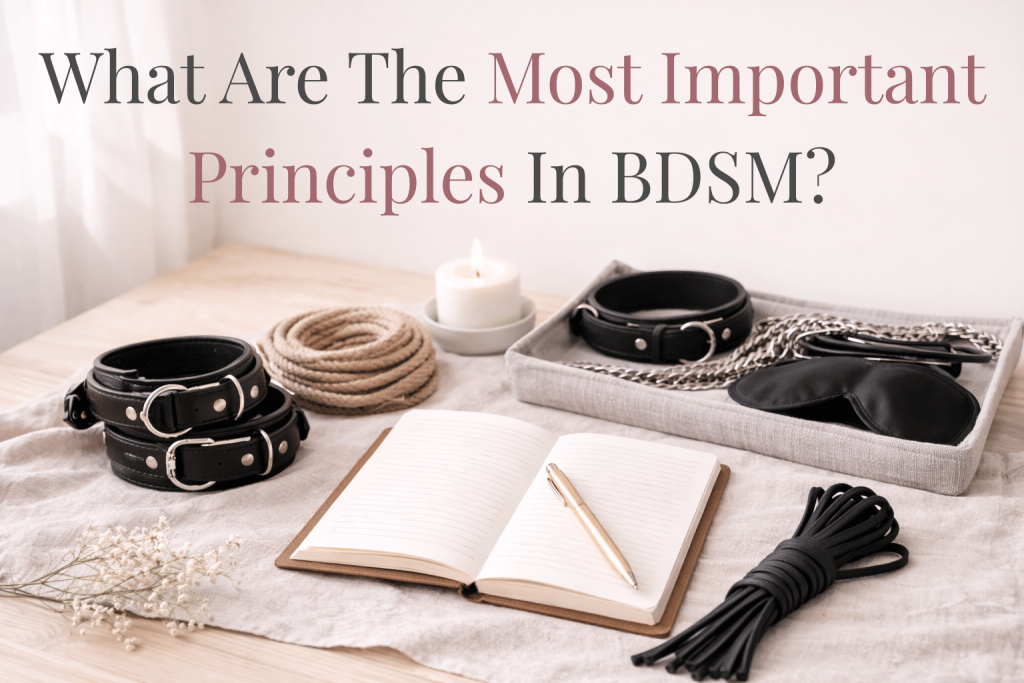
The Principles That Keep BDSM Healthy
Ethical BDSM is guided by three core principles: consent, communication, and care.
Consent ensures that everyone involved is choosing to participate freely and understands what is happening. Communication allows partners to discuss needs, adjust boundaries, and address emotional responses as they arise. Care reflects the responsibility people take for each other’s physical and emotional well-being.
These principles extend beyond scenes. They influence how partners talk to each other, how they resolve conflict, and how they support one another after intense experiences.
BDSM is safest when these principles are treated as ongoing practices, not one-time steps.

Understanding Power Exchange and Dynamics
Once consent and trust are established, some people choose to explore power exchange through a dynamic.
A dynamic is a consensual relationship structure where authority or control is voluntarily given within negotiated limits. Common examples include Dominant and submissive, Master and slave, or Caregiver and little.
Dynamics vary widely. Some exist only during scenes. Others extend into daily routines, rituals, or decision-making. Some are playful and light. Others are deeply structured and serious.
What makes a dynamic healthy is not its intensity, but its transparency. Authority in BDSM is granted, not taken, and it exists only as long as consent continues.
Scenes Versus Ongoing Dynamics
Understanding the difference between scenes and dynamics helps clarify how BDSM fits into relationships.
A scene is a specific period of play with a clear beginning and end. It may last minutes or hours and is often negotiated in advance. A dynamic is the broader relationship framework that may continue beyond individual scenes.
Someone can enjoy scenes without having an ongoing dynamic. Others may maintain a dynamic even when scenes are infrequent. Neither approach is more valid than the other.
Clarity around expectations helps keep BDSM safe and emotionally sustainable.
Is BDSM Always Sexual?
Another common question that people tend to ask along with “Is BDSM Safe?” is whether BDSM is always sexual. The answer is no.
While BDSM can include sexual elements, many people engage in it for non-sexual reasons. Power exchange, discipline, ritual, or sensation play can exist without sexual contact. Some people find emotional grounding or stress relief through structured dynamics.
There are also asexual individuals who practice BDSM as a form of intimacy or self-expression. BDSM exists on a spectrum, and sexual activity is optional rather than assumed.
Each relationship defines what BDSM means for their relationship.
Aftercare and Emotional Safety
Because BDSM can involve emotional or physical intensity, aftercare plays an essential role in safety.
During play, the body releases adrenaline and endorphins. When those chemicals fade, some people experience emotional sensitivity, fatigue, or mood shifts. This is sometimes referred to as a drop.
Aftercare is the intentional support partners provide after a scene. It may include reassurance, physical comfort, conversation, hydration, or quiet time together. Aftercare helps partners reconnect and process the experience.
Responsible aftercare is one reason BDSM can be safe even when scenes are intense.
For many people, understanding consent and communication is what finally answers the question, “is BDSM safe,” in a way that feels grounded and real.
Community and BDSM Exploration
One of the most reliable ways to answer the question “is BDSM safe?” is through education, not immediate action.
Learning about BDSM through reputable articles, guides, books, and community resources helps remove fear and misinformation before any hands-on exploration ever begins. Education allows people to understand consent, risk awareness, communication styles, and emotional safety long before they step into a scene or a dynamic. Knowledge creates context, and context reduces anxiety.
Attending events, workshops, or discussion groups can also be helpful, but they are not a requirement. While some people thrive in large social settings, others find them overwhelming. Introverts and introverted extroverts often need a slower, more controlled way to build comfort, and that is completely valid.
BDSM exploration does not require diving into crowded spaces, play parties, or high-energy events. For many people, safety comes from starting small. Finding a quiet online space, reading at your own pace, or connecting with one or two trusted people can feel far more grounding than walking into a room full of strangers.
Sometimes, joining a small group that meets once or twice a month is enough. A consistent, low-pressure environment allows relationships to build naturally. Over time, having a few familiar faces can make larger community events feel less intimidating, if attending them ever becomes something you want.
And it is important to say this clearly. No one is expected to jump into the deep end as soon as they realize they are kinky. In fact, that approach is strongly discouraged. Ethical BDSM encourages patience, self-awareness, and gradual exploration. Moving too quickly often leads to overwhelm, confusion, or unsafe situations.
There is no timeline you need to follow. There is no checklist you must complete. Safety in BDSM grows through learning, reflection, and intentional choices, not speed or social pressure.
For many people, the answer to “is BDSM safe?” becomes clearer over time as confidence grows. Education builds understanding. Familiarity builds comfort. And moving at your own pace builds trust, both with others and with yourself.
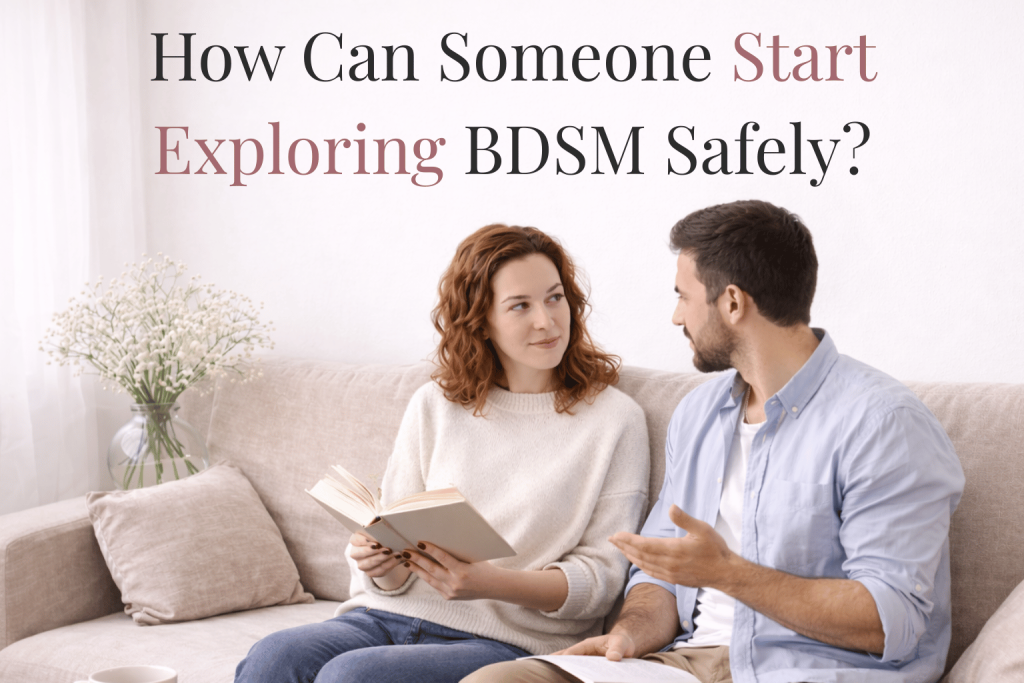
How Beginners Can Explore BDSM Safely
For many beginners, learning first is how the question “is BDSM safe and consensual” becomes less intimidating and more clearly answered.
Learning through reputable articles, guides, books, and community resources helps strip away fear and misinformation before any hands-on exploration begins. Education provides context around consent, communication, emotional safety, and risk awareness, all of which are essential to understanding how BDSM can be practiced safely.
Attending events or workshops can be helpful, but they are not required. Large gatherings can feel overwhelming, especially for introverts or introverted extroverts. BDSM exploration does not require walking into crowded spaces or jumping straight into high-energy environments.
For some people, safety comes from starting small. Reading at your own pace, engaging in online discussions, or connecting with one or two trusted people can feel far more grounding. Finding a small group that meets once or twice a month can help build comfort and familiarity, making the idea of larger events feel less intimidating over time, if attending them ever becomes appealing.
It is important to say this clearly. No one is expected to jump into the deep end as soon as they realize they are kinky. In fact, that approach is strongly discouraged. Ethical BDSM values patience, self-awareness, and gradual exploration.
There is no timeline to follow and no pressure to perform. Safety in BDSM grows through learning, reflection, and moving at a pace that feels right for you.
Final Thoughts: Is BDSM Safe and Consensual?
So, is BDSM safe and consensual?
It can be, when consent is informed, communication is ongoing, and trust is treated with care.
BDSM is not about harm, fear, or loss of autonomy. It is about choice, structure, and connection. At its best, it provides a framework for exploring intimacy and power in a way that is intentional and respectful.
Curiosity does not require commitment. Take your time. Learn at your own pace. Ask questions. And remember, consent is not just a rule in BDSM. It is the foundation that makes everything else possible.






One Comment